

World Environment Day 2026: A Global Call for Climate Action
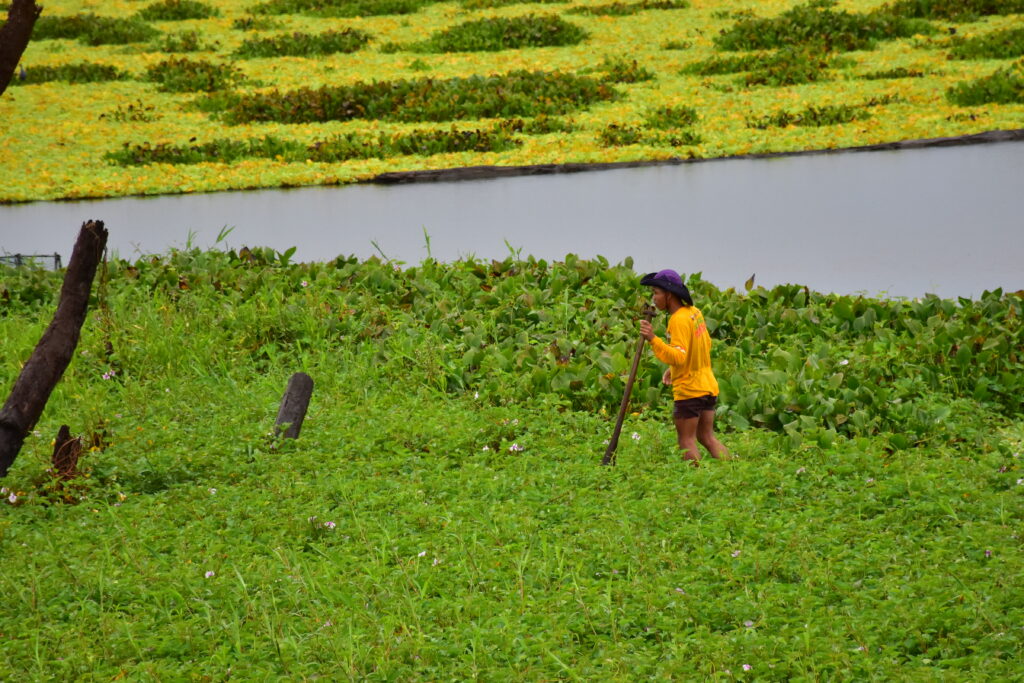
The Earth is a vast and flourishing planet, filled with an abundance of sightworthy wonders and natural resources. We humans are especially aware of this. With all that the planet has provided, we have been consistently pushing the bounds of technology and socioeconomic development.
While human curiosity may be limitless, the Earth and its resources are not. Despite this, we continue to exploit what the planet gives us, all in the name of progress. In turn, what do we have to give back?
Our mismanagement has led to dire consequences. According to the United Nations (UN), global average temperatures have gone up by at least 1°C since 1900. That number may sound little, but it is already enough to worsen droughts, speed up the rise in sea levels, and intensify extreme weather events.
Here in the Philippines, we face some of the harshest effects of climate change — stronger typhoons, hotter summers, heavier floods, and longer droughts. Although these issues are not new to many Filipinos, their impact on the country will only get worse if global temperatures continue to rise at their current rate.
Climate change not only affects the environment, but people too. Food insecurity and water bankruptcy — due to drought, flooding, and soil erosion — have increasingly become salient issues as the Philippines relies on agriculture to feed its people. Estimates from Climate Tracker Asia suggest that overall food production will decrease 4 percent by 2050, and that as many as 2 million Filipinos will be affected. The Department of Environment and Natural Resources (DENR) also reports that nearly 1 in 3 Filipinos currently lack access to a reliable water supply.
Meanwhile, weather events such as heatwaves and typhoons grow deadlier and costlier each year. Many communities are forced to relocate as their homes are destroyed by natural disasters. Economic losses are expected to skyrocket as entire industries are affected by property damages.
We must consider the reality. In this vast universe, the Earth is our one and only home. There is no other option than to protect the planet.
Giving Back to the Earth
Humanity has consistently pushed the bounds of technology and societal development, sometimes for the worse. But it doesn’t always have to be this way.
Every year, we commemorate World Environment Day on June 5. This year, we run on the theme of climate action.
Advancements in technology have paved the way for new and emerging solutions to mitigate the climate crisis. Green-gray solutions have entered the discourse of infrastructure development. Urban greening has created little copses of green spaces and elements in cities and architecture. And in the crux of the energy crisis, the country has started fast-tracking the transition to renewable energy, such as the building of solar panels and turbines to harness the power of the sun and wind. The sudden demand for electric vehicles also allow us to move beyond gasoline, helping to counteract the carbon emissions from the overuse of fossil fuels.
However, no other solution is as effective for climate action as nature itself.
Ecosystems such as wetlands are incredibly efficient carbon sinks. To compare, coastal wetlands store carbon significantly faster than tropical rainforests — by up to 55 times more. Meanwhile, peatlands store double the amount of carbon than the world’s forests altogether — 30 percent of all land-based carbon is sequestered in peatlands alone.
Furthermore, wetlands serve as a natural barrier against typhoons, floods, and other disasters. They also serve as a means of livelihood for many workers and consumers alike, contributing to local industries like fishing, agriculture, and even tourism.
All across the archipelago, the Philippines is home to a wide array of wetlands — constantly providing and protecting our local communities. Yet many Filipinos, including those in our very government, still seem to take wetlands for granted.
The time is at hand for us to prioritize nature-based and wetland-based solutions to address the crises we face on water, food, and energy. Let us push for wetland-specific policies, such as the National Wetlands Conservation Act, National Coastal Greenbelt Action Plan, and the National Peatlands Conservation Act.
Let us listen to science and innovate. Let us make our voices heard. Let us push for a paradigm, perception, and behavioral shift towards growth that honors both nature and life. And in our own small ways, let us make deliberate choices that respect our nation, environment, and people.
It’s time that we protect what protects us. It’s time that we give back to the planet. It’s time that we act now.
References
- Antonio, J. (2026, March 21). 40 million Pinoys lack access to reliable water supply. Philippine Star. https://www.philstar.com/headlines/2026/03/21/2515806/40-million-pinoys-lack-access-reliable-water-supply
- Climate Tracker Asia. (2025, November 3). When climate hits the fields: the new age of Filipino food insecurity. https://climatetracker.asia/climate-change-philippines-agriculture-food-security/
- Mendoza, A. (2022, February 2). Wetlands: an effective but undervalued climate solution. Green Climate Fund. https://www.greenclimate.fund/story/wetlands-effective-undervalued-climate-solution
- Mitsch, W. J., Bernal, B., Nahlik, A. M., Mander, Ü., Zhang, L., Anderson, C. J., Jørgensen, S. E., & Brix, H. (2012). Wetlands, carbon, and climate change. Landscape Ecology, 28, 583-597. https://doi.org/10.1007/s10980-012-9758-8
- United Nations. (n.d.). Causes and effects of climate change. https://www.un.org/en/climatechange/science/causes-effects-climate-change
- United Nations. (n.d.). 1.5°C: what it means and why it matters. https://www.un.org/en/climatechange/science/climate-issues/degrees-matterUnited Nations Environment Programme. (n.d.) World Environment Day 2026 Campaign.https://www.worldenvironmentday.global/2026/about/2026-campaign
About the Author
Yosh Matthew Miguel studies AB Communication at the Ateneo de Manila University. His passions are mainly in film and animal welfare. He also intends to pursue a career as an educator.