
Why the Philippines Needs the National Wetlands Conservation Act
Ask most Filipinos what a wetland is, and chances are they don’t know. At best, they’ll picture a mangrove forest. That’s not wrong, but it’s only a fraction of the picture.
Wetlands are the “in-between” ecosystems of our archipelago, not quite land, not quite sea. They include mangroves, yes, but also marshes, peatlands, rivers, lakes, seagrass beds, intertidal mudflats, and even human-made systems like rice paddies, fishponds, and reservoirs.
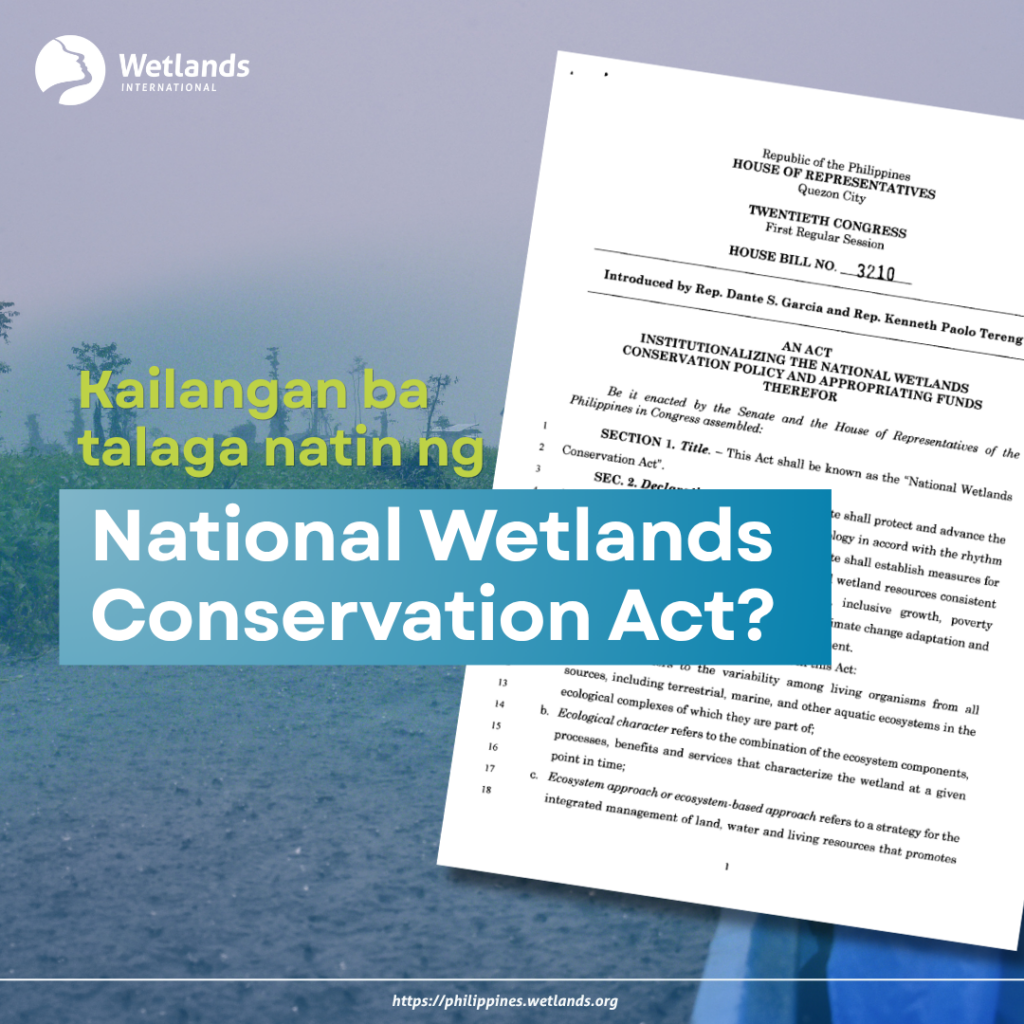
Given how much of our country’s identity is tied to water, it’s almost strange that wetlands remain one of the least protected ecosystems in Philippine environmental law. And that gap is exactly what the proposed National Wetlands Conservation Act is meant to close.
Under existing frameworks like the Expanded National Integrated Protected Areas System (ENIPAS) Act, Philippine wetlands are generally grouped into three categories: inland wetlands (marshes, peatlands, floodplains, rivers, lakes), coastal and marine wetlands (mangroves, saltmarshes, mudflats, seagrass beds, and shallow reefs), and human-made wetlands (dams, rice paddies, wastewater ponds).
Coastal wetlands in particular store enormous amounts of blue carbon, carbon captured and locked away in soil and biomass, often at rates that outpace terrestrial forests. Losing a mangrove forest or a peatland doesn’t just mean losing biodiversity; it can also mean releasing centuries’ worth of stored carbon back into the atmosphere.
The Philippines has environmental legislation that touches on wetlands indirectly:. the Forestry Code, the Revised Fisheries Code, and the Wildlife Resources Conservation and Protection Act, among others. But none of these laws was written specifically for wetlands. Wetland protection has essentially been assembled from spare parts.
Meanwhile, the threats keep piling up: land conversion for aquaculture and development, unsustainable fishing and aquaculture practices, pollution, invasive species, and mining exploration all continue to erode wetland cover across the country. Some of our most ecologically significant wetlands have already recorded steep declines in the species that depend on them.
The Philippines has never passed a law that treats wetlands as a category worth protecting in their own right. That’s despite being a Ramsar Convention signatory since the 1990s, and despite the fact that wetlands underpin food security, water security, and disaster resilience for millions of Filipinos living along our coasts and river systems.
The National Wetlands Conservation Act is not really a new idea it is one that environmental officials, legislators, and conservation groups have been pushing since at least the early 2000s. What’s changed is the urgency. Every year without a unified wetland policy is another year of unregulated conversion, pollution, and habitat loss, losses that, once they cross a certain threshold, are extremely difficult to reverse.
So, do we really need the National Wetlands Conservation Act? Yes. Not despite how much water surrounds us, but because of it.
So now is the time to turn awareness into action. As individuals, we can support wetland conservation by helping spread awareness. Be creative. Share information about the role of wetlands in biodiversity, flood control, carbon storage, and food security. This can help build public support for conservation.
We can also reduce pollution by properly disposing of waste, minimizing single-use plastics, and avoiding dumping chemicals, oil, or household waste into waterways that eventually drain into wetlands.
And by choosing seafood from responsible sources and supporting fishing practices that do not damage mangroves, seagrass beds, and other wetland habitats, we support sustainable seafood production.
We can also participate in river and coastal cleanups, citizen science programs, and community-based environmental initiatives.
Let’s also practice responsible tourism when visiting wetlands. Leave no trash behind, keep wildlife undisturbed, and respect the locals and their environmental rules.
Finally, let us advocate for stronger wetland protection. Send a clear message to elected officials, sign petitions, participate in public consultations, and support policies like the National Wetlands Conservation Act.
There are plenty more ways to join the wetland movement.
After all, protecting wetlands is not just the responsibility of governments and conservation groups. It is every Filipino’s social and environmental duty. Water is everywhere in this 7,600-island archipelago, and it is up to us to foster a healthy and equally beneficial relationship with the water that surrounds us.
About the Author
Gwen Salespora studies Development Communication at the University of the Philippines Los Baños, with interests in community development, environmental communication, and participatory development journalism. Her work centers on local communities, culture, the arts, and social issues, driven by the belief that communication can be a meaningful force for advocacy and change.